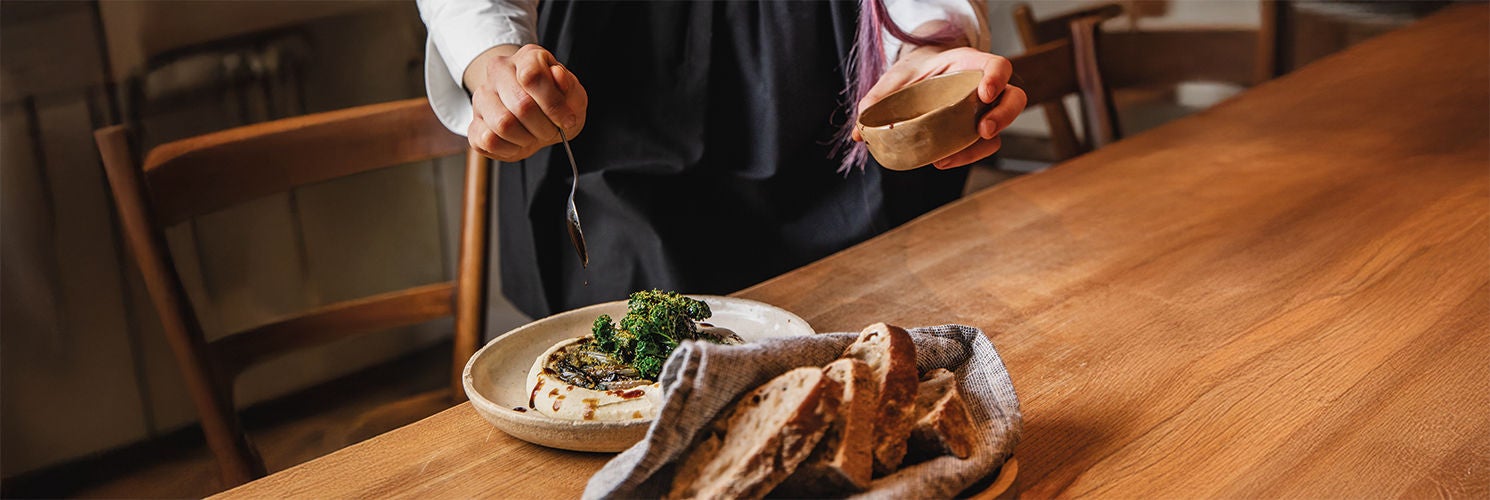

Cooking is not just technique or nutrition, but a language capable of expressing identity, values and emotions. Irene Volpe, chef and advocate of vegan cuisine, interprets food as a personal and collective expression, turning the plant-based world into a space of inclusion and experimentation.
In her journey, food becomes an emotional narrative, where every choice reflects a contemporary vision of tradition.
“Cooking is the mirror of the emotions I feel.”


PLANT-BASED
Irene Volpe: vegan cuisine, emotions and new Italian traditions
Published on 2026-02-02
Irene Volpe and food as a mirror of emotions
Vegan cuisine as a creative and inclusive language
From personal discovery to a shared vision
“I don’t know if I can define myself as a point of reference,” Irene says, “but through my dishes I try to tell stories of plant-based cuisine, inclusion and creativity.” Five years ago, she discovered that cooking could become a profession, beginning a path of study focused on ingredients and their environmental impact.
The choice to exclude animal products is not born as a renunciation, but as an opening: plants become a broad, versatile and never repetitive expressive tool. Her goal is to spread a sustainable, colorful cuisine capable of evoking emotion.
The perception of veganism: limitation or return to origins?
The relationship between plant-based cuisine and industry professionals
By engaging daily with colleagues and food professionals, Irene observes how vegan cuisine is often viewed with skepticism, interpreted as a limitation rather than a return to the fundamentals of cooking.
Many vegan products replicate meat or dairy: useful solutions in an initial phase, but they should not become the only reference model. Reducing animal ingredients does not mean constantly chasing their flavor, but leaving space for new gastronomic identities.
From “without” to “with something extra”: changing perspective
New possibilities within Italian tradition
Veganism is often associated with the idea of deprivation: without milk, without butter, without eggs. Irene overturns this approach. “Difference is not a lack: removing something can open up new possibilities.”
We are culturally tied to recipes considered unchangeable, such as the butter croissant or the great classics of Italian cuisine. Questioning these patterns may seem complex, but it can be liberating. Introducing small changes like choosing a plant-based product once a week—allows us to build new traditions, not just inherited ones, but consciously chosen.
“Difference is not a lack.”
Forno d’Asolo vegan products: an expert’s point of view
Flavor, balance and memory
Having tasted the entire sweet and savory vegan range by Forno d’Asolo, Irene highlights a fundamental aspect: the cleanliness of the bite. This is far from obvious, especially in breakfast products, which often turn out excessively sweet or heavy after just a few bites.
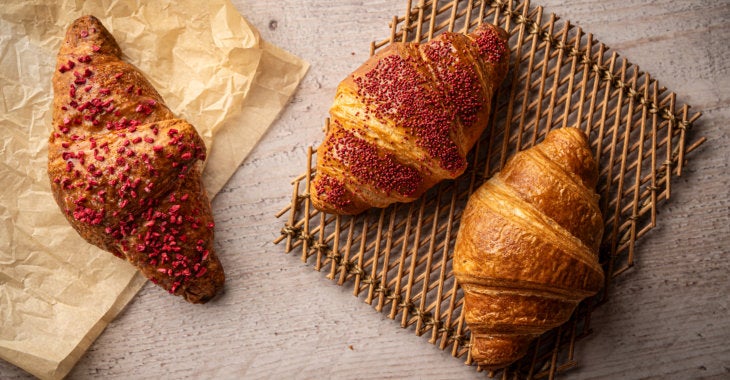
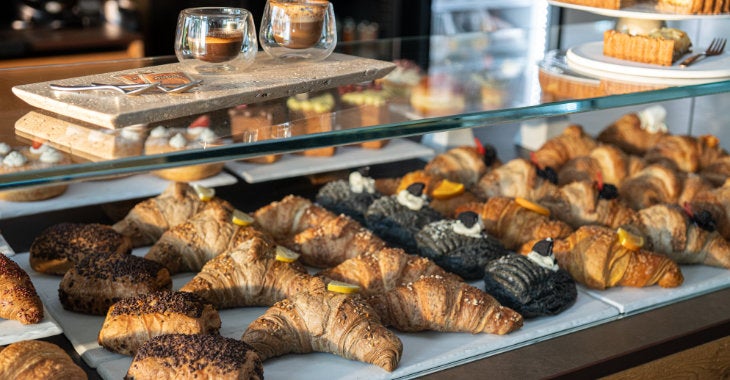
Here, balance is central. Among the references that impressed her most are the vegetable charcoal croissant and the red berries and goji croissant, both capable of evoking precise memories and sensations.
Bar breakfast and vegan options: sweet or savory?
An identity ritual that is slowly changing
In Italy, breakfast at the bar remains a deeply identity-driven moment. Cappuccino and croissant continue to be a shared ritual, even though Irene defines herself as “an atypical Italian,” with a personal preference for savory options.
When traveling, she always chooses based on local tradition: in Europe she loves brunch accompanied by drinks like chai latte or golden milk, while in England porridge with peanut butter and blueberries represents a simple and comforting routine.
The role of companies in spreading veganism in Italy
Tradition, practicality and inclusion
According to Irene, companies like Forno d’Asolo play a key role in showing that vegan options can coexist perfectly with Italian tradition. For products such as cakes or croissants, it is not essential to continue using ingredients of animal origin: many valid alternatives exist. A wide vegan range not just one or two items, but a complete assortment makes this choice feasible even for food service venues.
Opting for a fully plant-based offering means reducing cross-contamination, limiting allergens and building a more inclusive offer, sending a clear message: eating more plant-based food is possible, current and stimulating for creativity.
“The plant-based world is infinite and versatile, and you never stop experimenting.”